When a patient receives an imaging disc, the assumption is that it will be readable whenever they need it — whether that’s next week for a specialist appointment or years from now for a legal proceeding or ongoing treatment comparison. But optical media doesn’t last forever, and how long a disc remains readable depends significantly on its quality and how it’s stored.
Understanding disc longevity is practical information for any facility that distributes or archives imaging studies on physical media.
What the Research Says
Manufacturers of archival-grade optical media often cite lifespans of 50 to 100 years under ideal conditions. Standard consumer-grade discs tell a different story — estimates for lower-quality media range from as few as 5 to 10 years before degradation begins to affect readability.
The difference comes down to the materials used in the disc’s reflective and dye layers. Higher-quality discs use more stable compounds that resist breakdown over time. The discs your facility chooses to distribute aren’t just a branding decision — they’re a data integrity decision.
What Is Disc Rot?
Disc rot is the term used to describe the physical and chemical breakdown of optical media over time. It can manifest as discoloration, pinhole oxidation in the reflective layer, or delamination of the disc’s protective coating. The result is data loss — sometimes partial, sometimes complete.
Disc rot isn’t always visible to the naked eye until significant damage has already occurred. This is one reason why quality of manufacture matters so much. A disc that looks fine may already be compromised internally.
Storage Conditions Make a Significant Difference
Even high-quality discs degrade faster under poor storage conditions. The main environmental factors to control are heat, humidity, and light.
Discs should be stored at moderate room temperature — consistently high temperatures accelerate chemical breakdown. Humidity is equally important; moisture promotes oxidation of the reflective layer. Store discs in a cool, dry environment and avoid locations near windows or exterior walls where temperature swings are common.
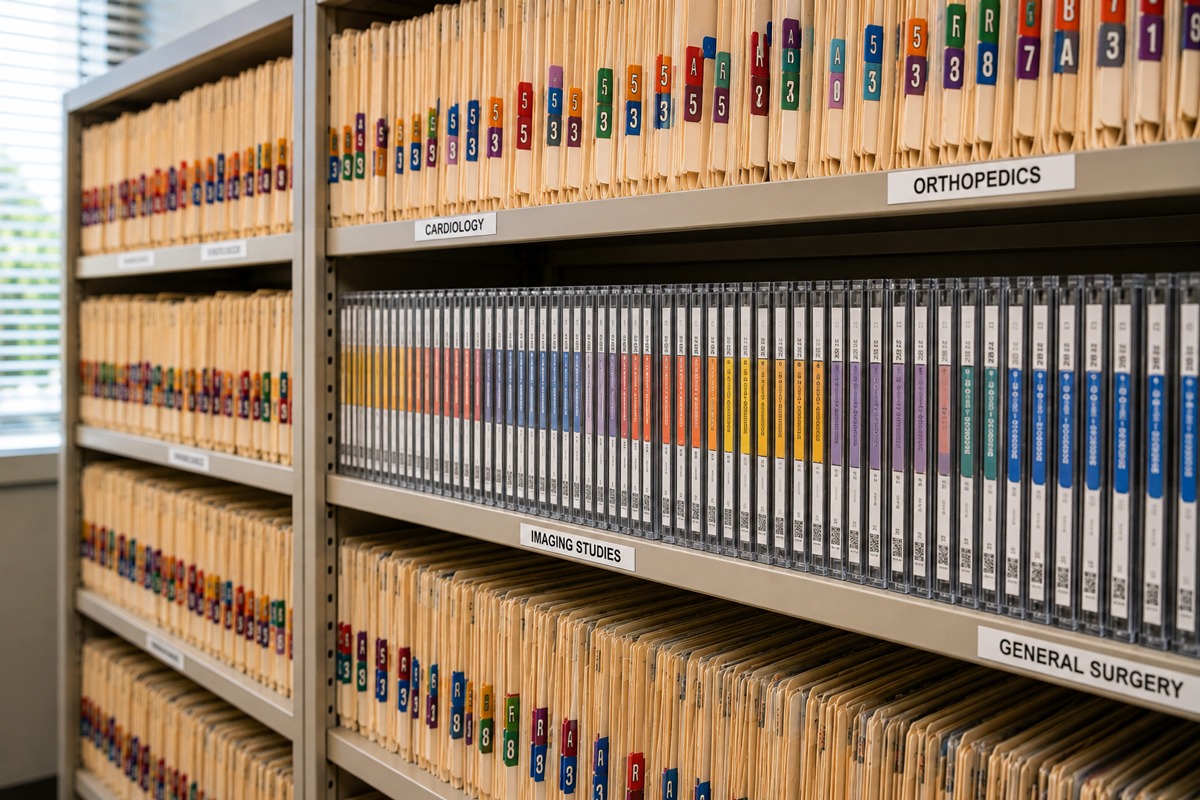
Physical storage matters too. Jewel cases provide better protection than paper or plastic sleeves, which can scratch the disc surface over time. Discs should be stored vertically, like books on a shelf, rather than stacked horizontally under pressure.
Practical Guidance for Healthcare Facilities
For discs distributed directly to patients for personal use, standard quality media is generally appropriate — they’re used within a short timeframe and not expected to serve as the facility’s permanent record. For any disc your facility retains as part of its own archive, archival-grade media is worth the modest additional cost.
Regardless of media quality, physical discs should not be considered a sole archival solution. They work best as part of a broader records strategy that includes backup in your PACS or a secure digital system.
The discs you send out represent your facility long after the patient walks out the door. Choosing quality media and following basic storage guidance ensures those records remain accessible — and that your practice remains associated with reliability when it matters most.